Leaking Around Your Chimney? Why Flashing Fails First and How It Gets Fixed
Quick Answer: A chimney leak almost always starts at the flashing, the layered metal that joins the brick to the shingles, rather than in the chimney itself. The usual culprits are failed sealant, loose counterflashing, rusted metal, and a missing cricket on the high side of the stack. Wind pushed rain on the Gulf Coast finds these weak spots faster than calm rain ever would, which is why many chimney leaks show up only during storms. A lasting fix rebuilds the overlapping layers and checks the mortar that anchors them. A smear of roof cement over the symptom rarely holds for a full season.
The stain shows up on the ceiling beside the fireplace after a Tuesday night thunderstorm, a faint brown ring about the size of a saucer. By Saturday the sun is out, the ring has dried, and you almost talk yourself out of worrying. Then the next squall rolls in off Lake Pontchartrain, the wind swings to the southeast, and the ring comes back larger than before. That pattern, a leak that comes and goes with the weather, is the classic signature of chimney flashing in trouble.
Flashing is the part of the roof nobody notices until it fails, and a chimney is the hardest place on any roof to keep watertight. Brick, mortar, metal, and shingles all expand and shrink at different rates, and every one of them has to stay sealed against rain that often arrives sideways. Understanding how that junction is built makes it much easier to see why it breaks and what a proper repair looks like.
What Chimney Flashing Actually Is
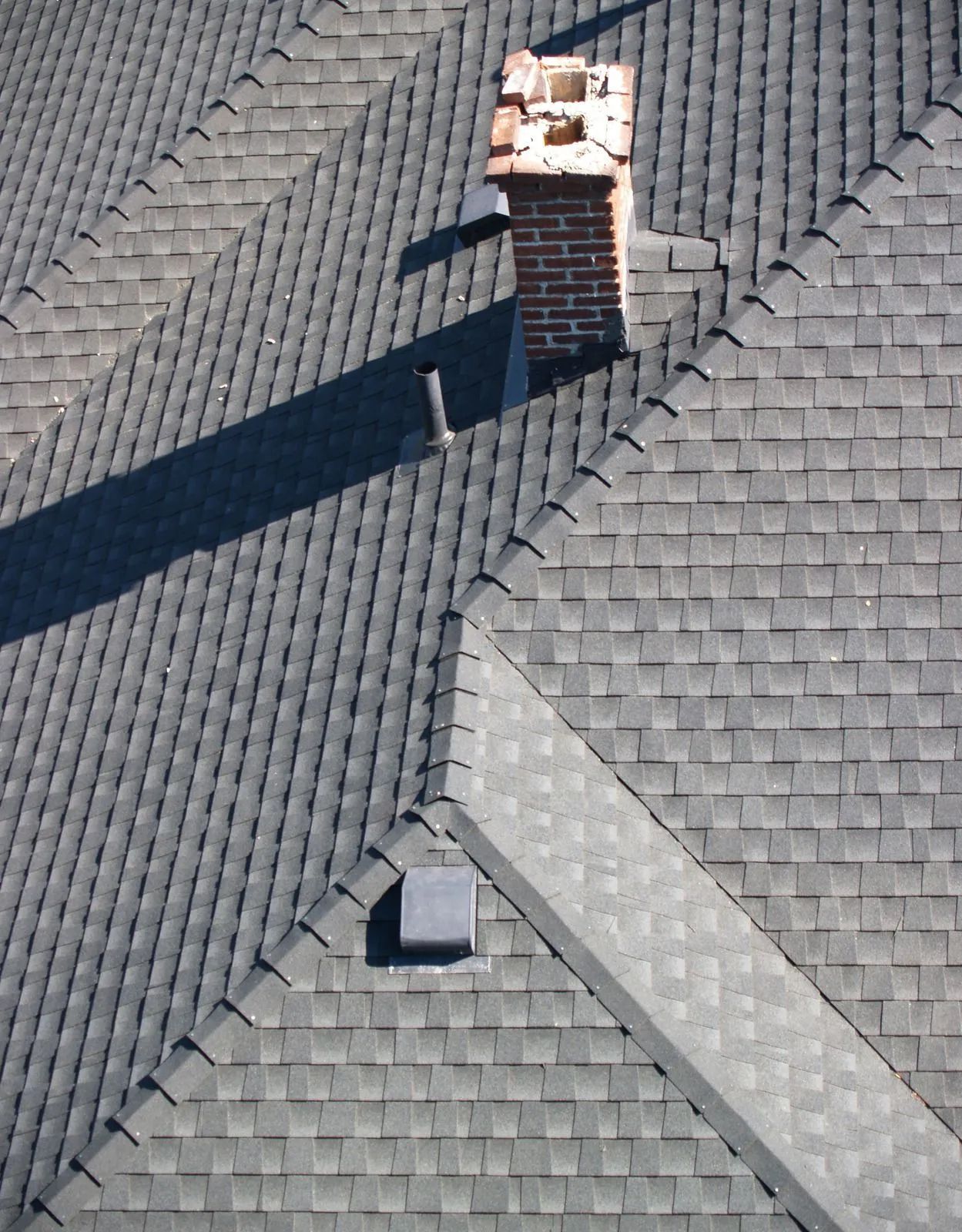
Most people picture flashing as a strip of metal caulked to the side of the chimney. A properly built chimney joint is more like a set of shingled layers, each one overlapping the next so gravity carries water down and out. Once you see the layers, the failure points become obvious.
Base Flashing
Base flashing sits against the roof deck beneath the shingles. Along chimney sides, stepped pieces follow each shingle course, directing water from brick onto shingles. An apron handles the lower edge below it as well.
Counterflashing
Counterflashing forms the second metal layer, set into chimney mortar joints and overlapping base flashing. It hangs over the base layer, shedding water across its upper edge instead of relying on surface sealant for protection.
The Cricket
A cricket sits on the uphill chimney side, where runoff can stall against the brick wall. This peaked structure divides water and debris, sending both around the chimney instead of letting them collect there safely.
Sealant
Sealant supports joints and flashing slots, but should not provide primary protection. Durable chimney flashing depends on properly formed, overlapped, and fastened metal. Relying mainly on sealant invites premature failure and leaks over time consistently.
Why Flashing Fails Before Anything Else on the Roof
Shingles cover broad flat areas and are built to be forgiving. A chimney interrupts that surface with a vertical mass of masonry that moves differently from the roof around it. Every season puts a little stress on that seam, and Southeast Louisiana puts plenty of stress on it.
Old Sealant Gives Out
Roof cement and tar based sealants eventually harden and crack after repeated summer heat. Small gaps can develop by fall, allowing water into the roof deck without obvious exterior signs.
Mortar Loosens Its Grip
Counterflashing depends on sound mortar for its anchor securely. Repeated wet and dry cycles weaken mortar, allowing metal to loosen, lift from brick, and create channels behind the base flashing.
Metal Corrodes
Galvanized steel can rust around cut edges and fastener holes, especially in humid coastal air. Copper lasts longer, while mixed metals or incompatible fasteners can accelerate corrosion and failure eventually.
Everything Moves
Brick, wood framing, and metal expand and contract differently with temperature changes. Daily heating and cooling cycles gradually loosen fasteners and open seams, especially around flashing corners and joints slowly.
The Chimney Settles
Older masonry chimneys can settle independently from the house. Even slight movement may pull the chimney away from flashing, opening gaps that were absent when the roof was installed originally.
Repairs Pile Up
Repeated sealant patches can hide the original leak instead of fixing it. Multiple layers also complicate diagnosis, forcing future repairs to remove old material before identifying the underlying problem correctly.
Why Wind Pushed Rain Finds the Weak Spot
Ordinary vertical rain runs down the roof and sheds correctly even from a flashing detail that is a little tired. Gulf Coast storms are different. When a squall line comes through Mandeville or Slidell with strong gusts behind it, rain is driven sideways and even slightly uphill into every lap and seam on the windward side of the chimney.
That is why so many homeowners describe the same frustrating pattern. The leak appears only in a bad storm, only when the wind comes from one direction, and then it vanishes for weeks. A flashing flaw with a small opening will shed gentle rain without any trouble. It takes real wind to push water through a gap that size, and that is precisely the kind of weather that hits the North Shore several times a season.
The takeaway is simple. A leak that only appears in wind is still a leak, and it is still telling you where the weakness is. Writing down which direction the wind was blowing when the stain grew gives a roofer a useful head start, because it points to the side of the chimney where the defect probably sits.
Signs Your Chimney Flashing Is the Culprit
You do not need to climb anywhere to gather good evidence. Most of the clues are visible from the ground or from inside the house, and none of them require you to touch the roof.
Stains Near The Chimney Breast
Brown ceiling or wall rings, bubbling paint, peeling surfaces, and loose wallpaper near the chimney can indicate ongoing water intrusion from failed flashing.
Damp In The Attic
Check around the chimney where it passes through the roof deck. Dark wood trails, wet insulation, musty odors, and white mineral deposits indicate moisture.
Visible Metal Problems
Use binoculars to inspect flashing for lifted edges, bends, rust streaks, or heavy sealant buildup. Visible gaps allow rainwater to enter the roof.
Crumbling Mortar At The Joint Line
Sandy, recessed, or missing mortar around counterflashing leaves metal poorly anchored. Deteriorated joints can allow water behind flashing and into the roof assembly.
Debris Stacked Behind The Chimney
Leaves and pine needles collect uphill of chimneys, especially without crickets. Debris traps moisture against shingles, accelerating deterioration of roofing materials and underlayment over time.
A Leak That Comes Back After Sealing
If the same leak returns after sealing, underlying flashing likely needs repair. Adding more sealant rarely fixes the source or prevents recurring water intrusion.
Tip: After the next storm, take a dated photo of any ceiling stain and note which way the wind was blowing and how long the rain lasted. That short record helps a roofer narrow down which side of the chimney is admitting water, and it saves time on the first visit.
What Happens to a Roof When the Leak Goes Unchecked
Water entering at a chimney does not stay at the chimney. It soaks the roof deck first, then drips onto the insulation and the framing below, and finally reaches the drywall, which is usually the first place a homeowner sees any trouble. By then the damage behind the surface is often well ahead of what is visible.
In the Louisiana climate the moisture has nowhere quick to go. Wood that stays damp for weeks invites mold and rot, and the humid air in the attic slows drying even further. A small flashing gap that could have been fixed in a single visit can turn into a repair involving decking, framing, and interior finishes.
The masonry suffers too. Water that gets behind the counterflashing soaks the brick and mortar from the inside, which loosens the very joints that anchor the metal. The two problems feed each other, and the longer they run, the more of the chimney and roof they involve.
How a Proper Chimney Flashing Repair Works
A good repair starts with diagnosis, not a tube of sealant. The roofer needs to find where the water is getting in, how the pieces are layered, and whether the roof and masonry around the leak are still in good enough shape to hold a repair.
Find And Open The Source
The roofer traces the stain against roof shape and weather patterns, then removes enough shingles and material to inspect laps, fasteners, and decking directly.
Check The Supporting Materials
The roofer examines decking, underlayment, nearby shingles, and mortar joints. Soft decking or crumbling mortar must be repaired first, or new flashing may fail prematurely.
Rebuild The Layers
Damaged base flashing is replaced with stepped pieces woven through shingle courses. Counterflashing is secured into fresh mortar slots, properly overlapped, and sealed with flexible masonry sealant.
Address The Back Of The Chimney
If the chimney needs a cricket, adding or rebuilding one redirects concentrated runoff around the stack. This reduces water pressure against the flashing and roof surface.
Restore The Shingles And Verify
The surrounding shingles are restored around the new flashing so both materials shed water together. A final inspection confirms proper drainage and removes debris traps.
A Note On Sealant
Sealant belongs at specific joints, not over failing flashing. If repeated leaks receive only another sealant layer, ask what repairs address the underlying flashing assembly.
Repair or Replace the Flashing
Not every chimney leak means a full tear out. A targeted repair often makes sense when the problem is limited to one side of the chimney or one failed section, the metal itself is still sound, and the shingles around it are flexible and secure. If the counterflashing has come loose only because the mortar joint wore out, repointing the joint and setting the metal again can solve the problem without replacing everything.
A broader scope makes more sense when the metal is rusted through, several sections have failed, or the first installation used materials or overlaps that were never adequate. It also makes sense when the shingles around the chimney are brittle and hard to tie into. If the roof is nearing the end of its life anyway, rebuilding every flashing detail as part of a replacement is often the cleaner path, because the whole assembly gets built as one system at the same time.
An honest roofer will show you what was found under the old metal and explain why a repair or a larger scope is the better choice. That conversation should be specific, naming the flashing pieces involved and the location of each one, not a vague promise to seal everything.
Local Conditions Worth Keeping in Mind
Homes across Covington, Abita Springs, Madisonville, Pearl River, and Eden Isle share one trait that affects flashing. The weather asks a lot of every joint on the roof. Summer heat cycles the metal and mortar daily, humidity keeps the attic damp, and tropical systems add driving wind and rain on top of that.
Many North Shore homes also have older brick chimneys, and some sit beside tall pines that drop needles and debris onto the high side of the stack all year. A cricket and a clean back side go a long way toward keeping those homes dry. After any named storm, even one that passed without obvious roof damage, the chimney junction is worth a look from a safe distance, since a flashing that took a hard blow can look fine until the next heavy rain.
Warning: Do not climb onto a wet, steep, or storm damaged roof to inspect the chimney yourself. Walking on shingles can crack them and loosen flashing that was still holding, and a fall from a roof is a serious injury. Use binoculars from the ground and leave the roof level work to a trained crew.
Frequently Asked Questions
Can chimney flashing be repaired without replacing the whole roof?
Often it can. If the surrounding roof is still flexible and secure, the flashing can be rebuilt as a contained project. Brittle shingles, multiple leaks, or a damaged deck change the answer.
Why does my chimney only leak during heavy storms?
Wind pushes rain sideways and uphill into seams that shed ordinary rain. A small gap or loose edge on the windward side only leaks in strong gusts, but it will not close on its own.
Is caulk or roof cement enough to stop a chimney leak?
Sealant belongs at specific joints, but it cannot replace missing or poorly layered metal. A thick coat may hide the leak briefly, then crack in the heat, so repeated patching means rebuilding the layers.
What is a chimney cricket and do I need one?
A cricket is a small peaked structure behind the chimney that splits runoff around both sides. Manufacturers generally recommend one on chimneys wider than about 30 inches, since the wide back wall traps water.
How long does chimney flashing last?
Galvanized steel may last roughly 15 to 25 years before rust sets in, while copper lasts considerably longer. Mortar and sealant usually wear out first, so periodic checks matter more than any single number.
How often should the chimney flashing be inspected?
A yearly look is a good habit in this climate, plus another after any major storm. Binoculars from the ground and an attic check catch early problems, while a roofer can inspect the overlaps and mortar up close.
A Dry Ceiling Begins Up at the Roofline
A chimney leak feels like an interior problem, but the repair belongs on the roof, in the overlapping metal that most of us never see. The earlier that junction is checked, the smaller the fix tends to be. If the ceiling beside your fireplace shows a ring that grows with each storm, treat it as useful information rather than an annoyance. It points to the spot where water is getting in, and that makes the whole job easier.
For 55
years, Bruce Harris Roofing & Repairs
has worked on homes in Lacombe, LA, and the same lesson comes up on roof after roof. Flashing rebuilt in proper layers, with sound mortar behind it, tends to hold through many seasons of wind and rain. Looking at the chimney junction before the next system rolls through is a small habit that can spare a home years of hidden moisture damage and the repairs that follow.