Roof Making Noise During Storms? Here's What Wind Damage Looks Like Before It Becomes a Leak
Wind doesn't announce itself the way rain does. A downpour shows up in a bucket under a stain within hours. Wind works slower and quieter — a shingle tab lifts a quarter inch, a nail backs out, a piece of flashing loosens at one corner — and none of it drips through your ceiling for weeks, sometimes months. By the time water actually gets inside, the wind did its damage long before the storm that finally pushed it through.
That gap between "the wind did something" and "you can see it" is exactly where roofs get expensive. Catching wind damage in that window, while it's still cosmetic and structural rather than a full leak, is the difference between a targeted repair and tearing out soaked decking.
Quick Answer: Wind damage to a roof usually shows up first as lifted or missing shingle tabs, exposed or dark granule patches, bent or loose flashing, and popped or raised nail heads — none of which necessarily leak right away. The safest approach after any storm with sustained gusts is a ground-level walk-around within a day or two, followed by a closer inspection if you notice anything irregular, rather than waiting for a stain to appear on your ceiling.
Why Wind Damages a Roof Before You Ever See a Leak
Asphalt shingles are designed to overlap and seal to one another, using an adhesive strip activated by sun and heat that bonds each shingle to the one below it. Wind attacks that seal directly. Gusts get up underneath the tab edge, and if the seal is weak — because the shingle is aging, the seal never fully activated, or the wind angle catches it just right — the tab lifts. Sometimes it lays back down and reseals. Sometimes it doesn't, and it flaps every time the wind picks up until it eventually tears free or lets water track underneath it during the next rain.
That's the pattern behind almost every wind-related roof problem: the initial event breaks a seal or loosens a fastener, but the actual leak doesn't show up until a separate rain event finds that opening. A roof can carry real wind damage through several dry weeks before anyone inside the house notices a thing.
Roofing manufacturers test asphalt shingles specifically for this failure mode. Shingles rated to industry wind-resistance standards are tested at sustained speeds well above what a typical afternoon storm produces, with some premium products validated past 150 mph in laboratory conditions. That rating matters for new installations, but it doesn't mean an existing, aging roof performs the same way — sealant strips weaken with UV exposure and heat cycling over the years, and a fifteen-year-old roof doesn't hold wind the way it did when it was new.
What You Can Spot From the Ground
You don't need to get on a ladder to catch the first signs of wind damage. Walk the perimeter of your home after any storm with sustained gusts and look up at the roofline, ideally with binoculars if your roof is steep or hard to see clearly.
Missing shingles
An obvious gap in the shingle pattern, sometimes with the underlayment or decking visible underneath, means a full tab tore free. This is the most urgent sign — an exposed spot lets water directly onto the deck the next time it rains.
Lifted or curled tabs
A shingle edge that's standing up instead of laying flat has a broken seal. It may look minor from the ground, but a lifted tab is an open invitation for wind to get underneath it again and finish the job.
Dark or discolored patches
These usually mean the protective granule coating has been scraped or blown off, exposing the asphalt layer underneath. That layer degrades faster in direct sun, so a bare patch today becomes a soft, failing spot within a season or two.
Debris on the roof surface
A branch or heavy debris pile isn't just an eyesore — it can be hiding a crack or puncture that happened when it landed, and it holds moisture against the shingle surface if it's not cleared.
Gutters and downspouts pulling away
Wind loads the whole roofline, not just the shingles. Gutters that have visibly sagged, twisted, or separated from the fascia after a storm point to the same wind forces that may have loosened shingles nearby.
What a Closer Look Reveals
If the ground-level check turns up anything questionable, or if the storm was severe enough to warrant it, a closer inspection from the roof itself finds problems that simply aren't visible from below.
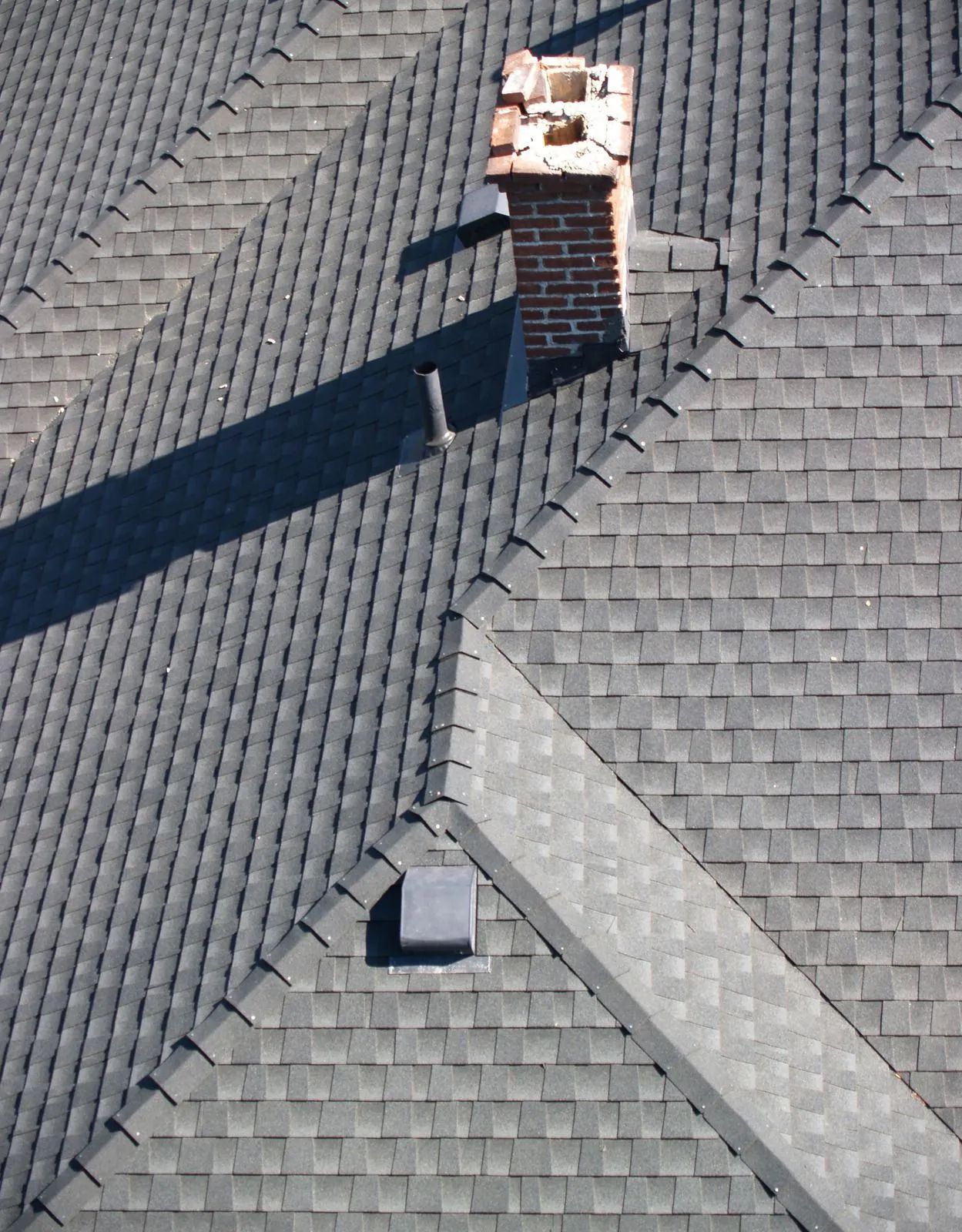
Loose or raised nail heads are one of the most common findings after a wind event, and they're almost invisible unless you're standing on the roof. A nail that has backed out even slightly no longer holds its shingle flat, and it's often just one more gust away from letting go completely. Flashing on the back side of chimneys, dormers, and other penetrations tends to catch wind loading that the front side never sees, so it needs to be checked from the roof surface rather than assumed fine because it looks fine from the yard.
Sounds That Signal Trouble
The noise that sends people outside during a windstorm is usually one of a few specific things. A steady flapping or slapping sound is almost always a lifted shingle tab catching the wind. A rhythmic ticking or clicking against the roof deck can mean a loose piece of flashing or a fastener that's backed out and is being pulled up and released with each gust. A scraping sound often traces back to a tree limb making contact with the roof surface, which is worth checking as soon as the wind calms down since limbs can gouge or puncture shingles on contact.
None of these sounds mean the roof is actively leaking in that moment. What they mean is that something has come loose, and loose components rarely fix themselves. Treat an unusual roof sound during a storm as a note to inspect the area as soon as it's safe to do so, rather than something to dismiss once the noise stops.
Tip: Keep a simple photo log of your roofline from the ground every few months, especially before hurricane season ramps up. Comparing "before" photos to what you see after a storm makes it much easier to spot a new gap, a fresh dark patch, or a shingle that's sitting differently than it used to.
Why Waiting Costs More Than Checking
A lifted shingle that gets reported and resealed quickly is a fast, contained repair. The same lifted shingle left through two or three more storms tends to tear free entirely, exposing the underlayment and deck to direct rain. Once water reaches the wood decking, it doesn't stay confined to one board — it wicks along the grain, soaks the insulation beneath it, and can travel a surprising distance from the original opening before it ever shows up as a stain on your ceiling. What would have been a shingle repair becomes a section of deck replacement, and the visible drywall damage is almost always smaller than the hidden damage that caused it.
Warning: Never attempt to inspect or repair storm-loosened shingles by climbing onto a wet or still-windy roof. Slick granules, unstable footing, and gusts that haven't fully died down make roof surfaces genuinely dangerous immediately after a storm — wait for calm, dry conditions or have a trained crew handle the closer look.
How Wind Resistance Ratings Actually Work
Every asphalt shingle sold today carries a wind rating based on standardized testing, and understanding what that rating actually measures helps explain why even a rated roof can still show wind damage over time. The tests simulate sustained wind uplift on a controlled shingle sample, checking at what speed the seal begins to fail. A shingle rated for higher sustained winds simply has a stronger adhesive bond and a fastening pattern engineered to resist uplift longer than a basic shingle does.
What the rating doesn't capture is the real-world variability of an actual roof — the number of fasteners actually driven correctly during installation, the age and condition of the sealant strip, ventilation quality underneath the deck, and the specific wind angle a given storm happens to produce against a specific roof slope. Two roofs installed with identical shingles can perform very differently in the same storm depending on installation quality and age. That's part of why a wind-damage inspection has to be roof-specific rather than assumed from a manufacturer spec sheet.
When It's Time for a Professional Assessment
A same-day ground walk-around is something every homeowner can and should do after a windy storm. A full roof-surface inspection makes more sense when you've spotted anything irregular from the ground, when the storm produced sustained gusts rather than a brief squall, when your roof is more than ten to fifteen years old, or when you simply want documentation of the roof's condition on record. Trained eyes catch loose nails, backside flashing issues, and early granule loss that are genuinely difficult to see without climbing up, and a written assessment gives you a clear baseline for comparison after the next storm.
Frequently Asked Questions
Does a flapping shingle always mean it needs to be replaced?
Not always. If the seal reactivates during a warm, sunny stretch, a lifted shingle can lay back down. Still flapping after several dry days means the adhesive has failed and needs resealing.
How soon after a storm should I check my roof?
As soon as conditions are calm, dry, and safe, ideally within a day or two. Waiting too long makes it harder to connect damage to the storm, and exposed spots stay vulnerable to rain.
Can wind damage a roof even without visible missing shingles?
Yes. Loosened nails, cracked sealant strips, and lifted flashing can all happen without any shingle going missing, which is why a ground-level check alone sometimes misses real damage a closer inspection catches.
Is a roof more vulnerable to wind as it ages?
Generally, yes. Sealant strips lose adhesive strength with years of heat and UV exposure, and shingles grow more brittle over time, making older roofs more susceptible to wind uplift than newer ones.
Does wind damage look different on a metal roof than a shingle roof?
It does. Metal panels rarely lift like shingle tabs, but wind can still loosen fasteners, work seams at panel edges, or lift trim and flashing, so post-storm checks still matter.
What's the difference between cosmetic and structural wind damage?
Cosmetic damage, like minor granule loss or a raised nail, affects appearance without creating an immediate opening for water. Structural damage, like a torn shingle or bent flashing, creates a direct path for moisture.
Catching Wind Damage Before It Becomes a Leak
A lifted shingle that gets reported and resealed quickly is a fast, contained repair. The same lifted shingle left through two or three more storms tends to tear free entirely, exposing the underlayment and deck to direct rain. What would have been a shingle repair becomes a section of deck replacement, and the visible drywall damage is almost always smaller than the hidden damage that caused it. Bruce Harris Roofing & Repairs has spent 55 years watching that exact pattern play out across Lacombe, Louisiana.
That experience is what separates a quick ground-level glance from an inspection that actually catches trouble early. A flapping tab, a ticking sound, a patch of missing granules, none of it means the roof is leaking yet, but all of it means something has come loose. Checking after the storm, before the next rain finds that opening, is what keeps a small repair small.